Go Back

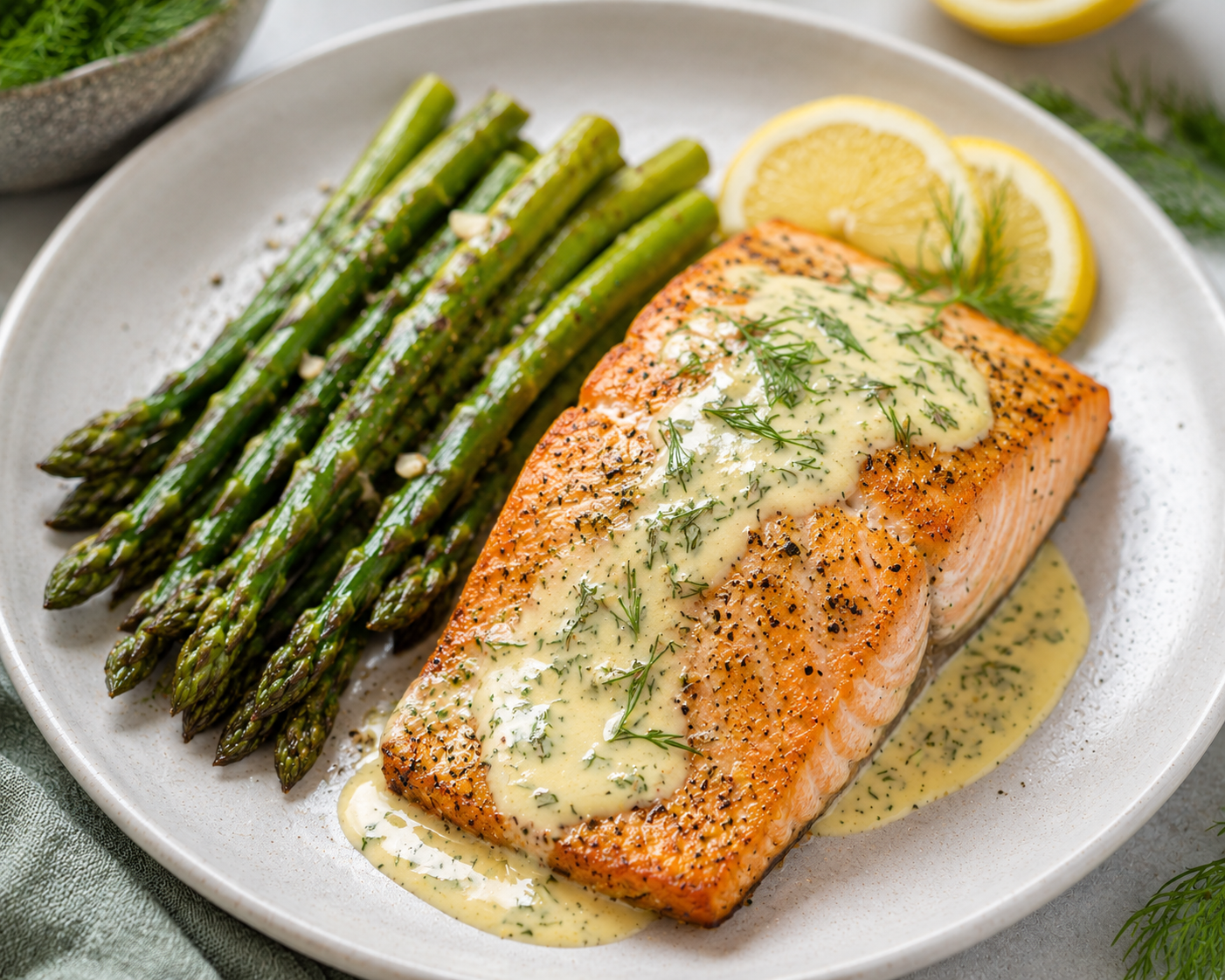
Baked Salmon with Asparagus & Lemon Dill Sauce

Ascites — that uncomfortable buildup of fluid in the abdomen — is largely driven by low protein levels and sodium retention. Your body is holding onto water it can't properly process, and the wrong foods make it significantly worse. This recipe fights back on every front. Salmon is one of the richest sources of high-quality protein available, which helps your body maintain the albumin levels needed to pull fluid back out of your abdomen. Asparagus is a natural diuretic — it literally helps your kidneys flush excess fluid. And the lemon dill sauce? Zero added salt, all flavour. This is the kind of meal that works as hard as your medical team does. Let's cook.
Prep Time 15 minutes
Cook Time 15 minutes
Total Time 30 minutes
Servings: 2 people
Course: Main Course
Cuisine: Healthy, Mediterranean
Calories: 340

Ingredients
  

For the Salmon
  • 2 salmon fillets approx. 150g each, skin-on
  • 1 tbsp extra virgin olive oil
  • ½ tsp garlic powder
  • ¼ tsp black pepper freshly ground
  • ¼ tsp dried oregano
  • ½ lemon sliced
For the Asparagus
  • 200 g fresh asparagus trimmed
  • 1 tsp extra virgin olive oil
  • 1 pinch black pepper
  • ¼ tsp garlic powder
For the Lemon Dill Sauce
  • 120 g plain low-fat yogurt
  • 2 tbsp fresh dill finely chopped
  • 1 tbsp lemon juice freshly squeezed
  • ½ clove garlic minced
  • 1 pinch black pepper

Equipment

  • 1 Oven Preheated to 200°C (390°F)
  • 1 Baking tray
  • 1 Parchment paper
  • 1 Small mixing bowl For the sauce

Method
 

  1. Preheat your oven to 200°C (390°F). Line a baking tray with parchment paper. Pat your salmon fillets dry with a paper towel — dry fish browns beautifully, wet fish steams instead. We want that gorgeous golden crust.
  2. Place your salmon fillets skin-side down on one half of the baking tray. Drizzle with olive oil and rub it gently over the surface. Sprinkle garlic powder, black pepper, and dried oregano evenly over both fillets. Lay two or three lemon slices directly on top of each fillet. No salt needed — you won't miss it.
  3. Trim the woody ends off your asparagus by snapping them where they naturally break, or cut about 3cm off the bottom. Arrange on the other half of the baking tray. Drizzle with olive oil, add black pepper and garlic powder, and toss lightly to coat.
  4. Slide the tray into the middle of the preheated oven and bake for 13–15 minutes depending on fillet thickness. The salmon is done when it flakes easily with a fork and the centre is just barely opaque. The asparagus should be tender with light colour on the tips. Don't overbake.
  5. While the salmon bakes, combine the yogurt, fresh dill, lemon juice, minced garlic, and black pepper in a small bowl. Stir well. It should taste bright, herby, and fresh.
  6. Lay your asparagus spears on the plate as a base, then place the salmon fillet directly on top. Spoon the lemon dill sauce generously alongside or over the fish. Finish with a few fresh dill fronds and a thin lemon slice. Eat immediately — salmon waits for no one.