
DIAGNOSIS: ALZHEIMER’S & DEMENTIA (MEMORY LOSS DISEASE)
Neuroprotective. Omega-3 packed. Italian tradition working hard for your brain.
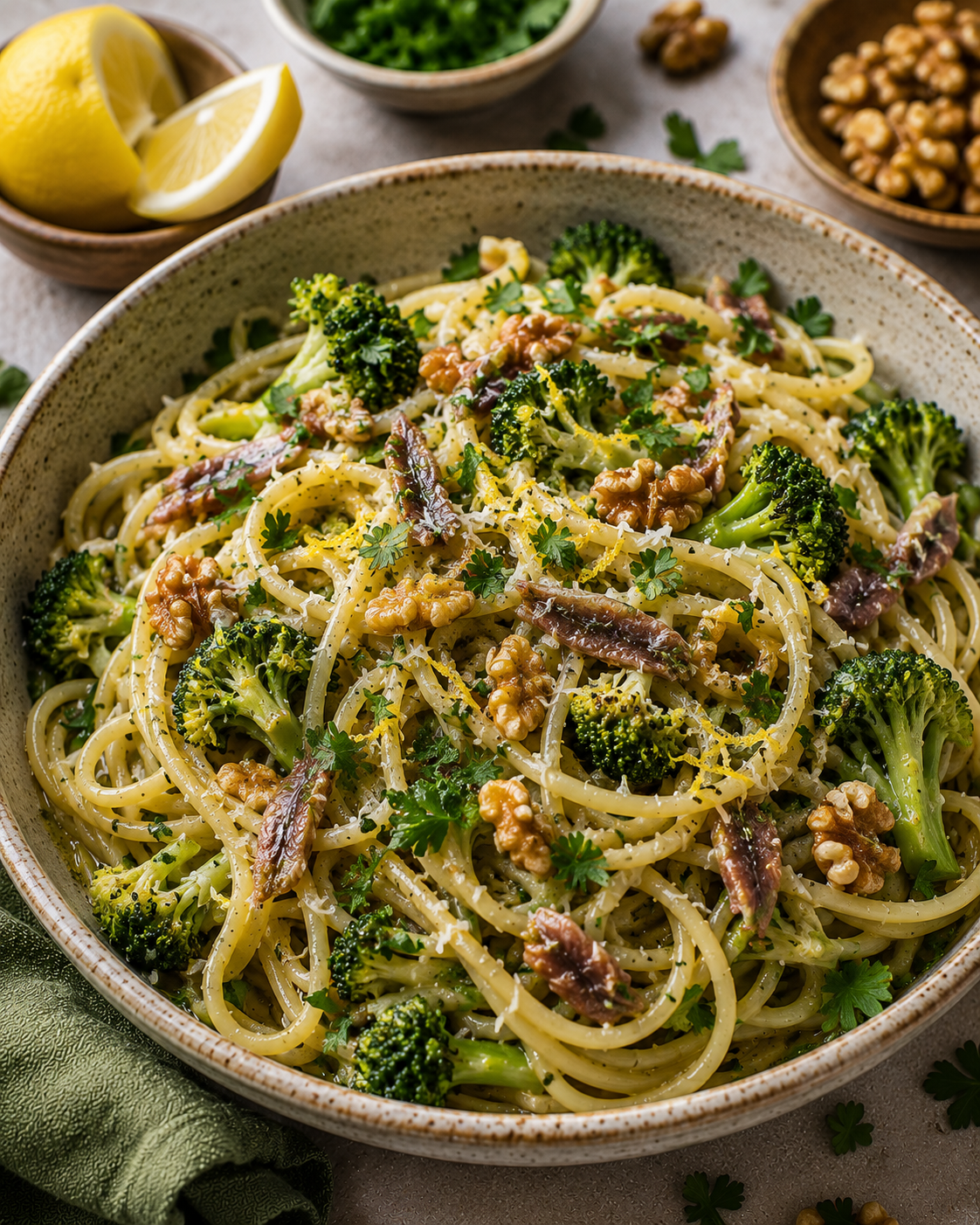
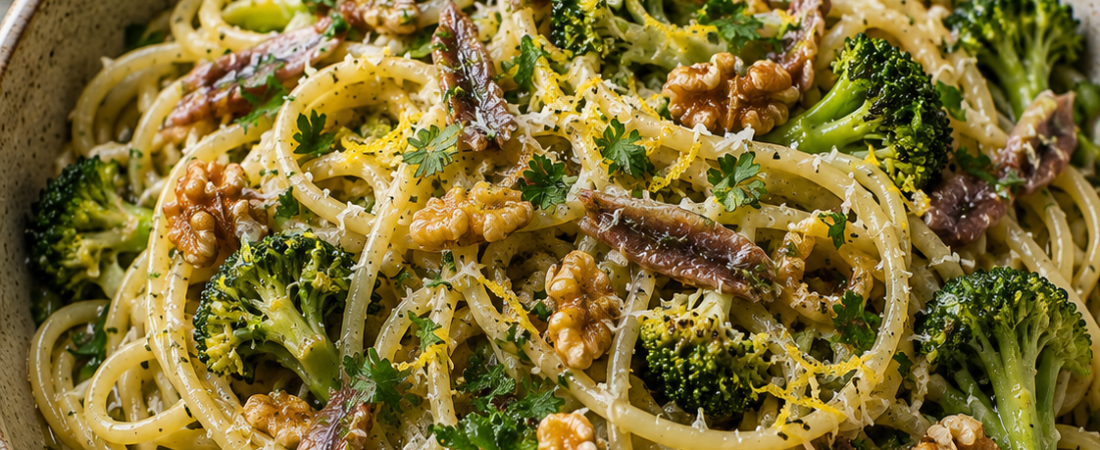
Italian Broccoli & Anchovy Pasta with Walnuts, Lemon Zest & Fresh Parsley
Ingredients
Equipment
Method
- Place the roughly chopped walnuts in a dry skillet over medium heat. Toast for 3–4 minutes, stirring frequently, until fragrant and lightly golden. Remove immediately and set aside.
- Bring a large pot of water to a boil. Add the pasta and cook according to package instructions until al dente. In the last 3 minutes of cooking, add the broccoli florets directly to the pasta water. Reserve a generous cup of pasta cooking water before draining. Drain and set aside.
- Heat the olive oil in a large skillet over medium-low heat. Add the sliced garlic and chilli flakes and cook gently for 2 minutes until soft and fragrant. Add the anchovy fillets and break them up completely with a fork — they will dissolve almost entirely into the oil. Cook for 2 minutes stirring constantly.
- Add the drained pasta and broccoli directly to the skillet. Toss everything together well, adding splashes of reserved pasta water to create a silky, glossy sauce. Add the lemon zest, black pepper, and half the fresh parsley. Toss again.
- Divide between two bowls. Scatter the toasted walnuts and remaining fresh parsley generously over the top. Finish with a final drizzle of extra virgin olive oil. Serve immediately.
NOTES
This recipe was created specifically for people managing Alzheimer’s & Dementia (Memory Loss Disease). Anchovies dissolve completely into the sauce — if you or the person you are cooking for has difficulty with fish texture, this is ideal as no whole pieces remain. Whole wheat pasta is used deliberately over white pasta — blood sugar spikes from refined carbohydrates are directly linked to accelerated cognitive decline. If the person you are cooking for has swallowing difficulties (dysphagia), ensure broccoli is cooked until very soft and walnuts are finely chopped or omitted entirely. Always consult your doctor or nutritionist before making significant dietary changes.